
Prostate cancer surgery
Leading Prostate Cancer Surgeon UK
Choosing the right specialist after a prostate cancer diagnosis
A leading prostate cancer surgeon brings together deep clinical experience, advanced surgical technique and care planned around each patient. After a diagnosis, choosing the right specialist is often the most important decision you make. This page sets out what expert prostate cancer care looks like, from the first tests to recovery, so you can choose with confidence.
You may have just had a raised PSA result, a diagnosis confirmed by mpMRI and biopsy, or want a second opinion on a treatment plan. Whichever it is, knowing what good surgical care looks like is the first step towards the right outcome.
What to look for
What makes a prostate cancer surgeon a leading specialist?
Leading prostate cancer surgeons in the UK are usually consultant urologists with wide experience of robotic and open surgery, a strong record in complex cases and an active role in multidisciplinary team (MDT) meetings.
Volume matters too. Surgeons who carry out a high number of robotic radical prostatectomies each year tend to achieve better continence and erection results, with fewer complications.
Read our blog on What Makes a Leading Prostate Cancer Surgeon Stand OutSigns of expert practice
- Every option explained clearly, including active surveillance, surgery, radiotherapy and hormone therapy
- Treatment decisions made with you, never imposed
- Openness about results
- Honesty about risks
- The same specialist from diagnosis to follow-up
Diagnosis
How is prostate cancer diagnosed and assessed?
An accurate diagnosis is the basis of every good outcome. A thorough assessment usually includes four steps.
PSA blood test
Digital rectal examination
Multiparametric MRI (mpMRI)
To find any areas that look suspicious.
Targeted or systematic biopsy
To confirm the Gleason score and grade group.
Together, these results place the cancer in a risk group, following NICE guideline NG131, so the treatment plan fits you as an individual rather than following a one-size-fits-all approach.
Low-risk cancer confined to the prostate
Active surveillance may be the right choice. It avoids treatment you do not need, while keeping a close watch for any change.
Intermediate or high-risk cancer
Surgery or radiotherapy is usually discussed, sometimes together with hormone treatment (androgen deprivation therapy, or ADT).
Book your consultation today
We treat all of our enquiries with compassionate and confidential care.
Treatment options
Which treatments might a specialist recommend?
Each option has its own benefits and trade-offs. A good specialist talks you through them in plain English, without pressure or jargon.
Robotic radical prostatectomy
Now the standard surgical approach for many men with localised prostate cancer, with smaller incisions, less blood loss and a quicker recovery than open surgery. Nerve-sparing techniques aim to protect continence and sexual function wherever it is safe to do so.
Expert robotic surgery in LondonRadiotherapy
External beam radiotherapy or brachytherapy, considered alongside surgery.
HIFU
High-intensity focused ultrasound, for carefully selected patients.
Active surveillance
Close monitoring for low-risk cancer that is confined to the prostate.
If you also have urinary symptoms from an enlarged prostate, procedures such as HoLEP may be discussed separately from your cancer treatment.
Experience and results
Why do a surgeon’s experience and results matter?
Results after prostate cancer surgery vary considerably from one surgeon to another. Looking for a leading specialist, rather than the nearest available appointment, is a sensible approach.
Questions to ask your surgeon
- How many of these operations do you carry out each year?
- What are your continence and erection results?
- What is your positive margin rate?
- How will my PSA be checked after surgery, and what happens if it starts to rise?
A leading specialist also works closely with oncologists, radiologists and specialist nurses as one MDT, so nothing falls through the gaps in a complex care pathway.
Videos
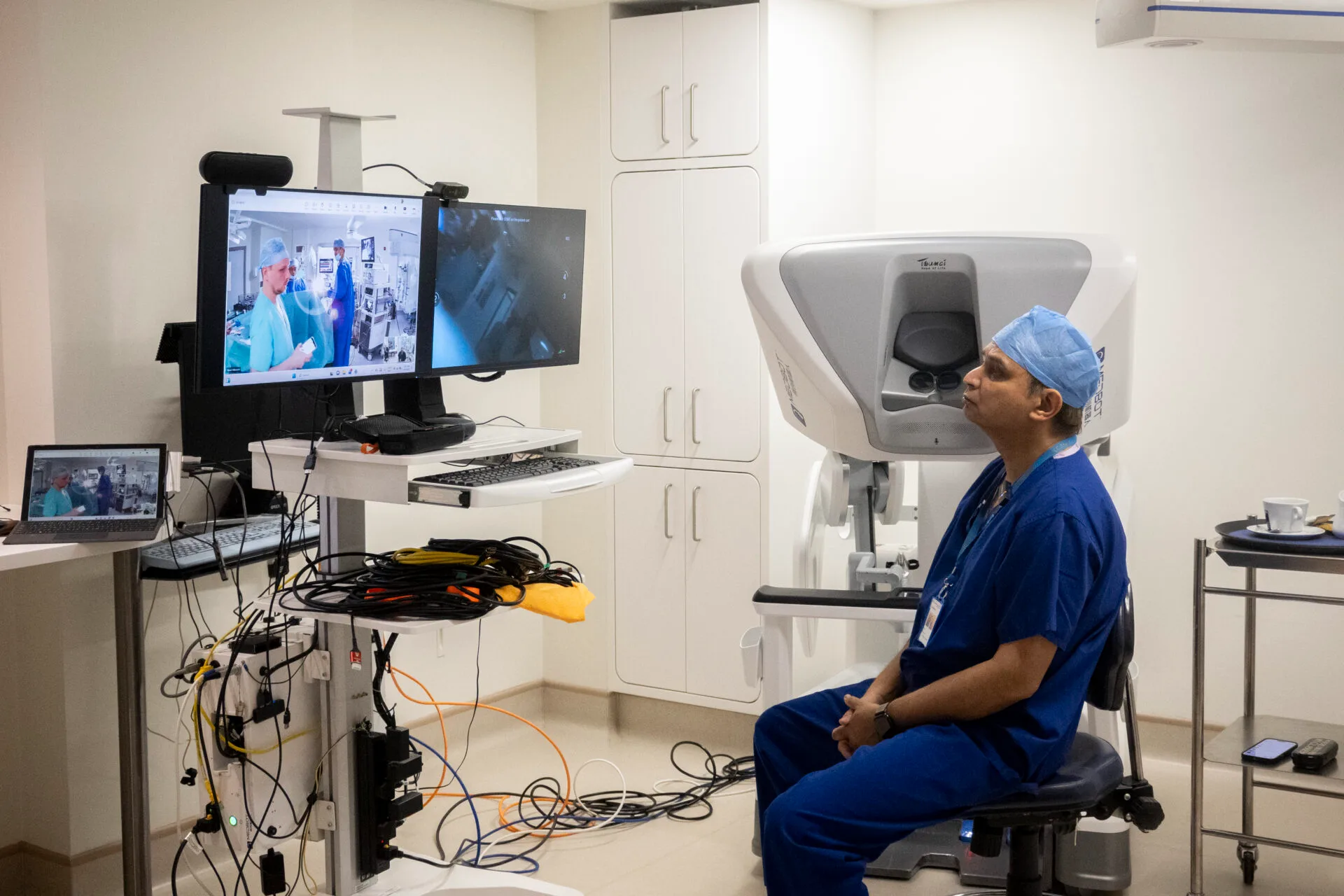
Robotic surgery at The London Clinic
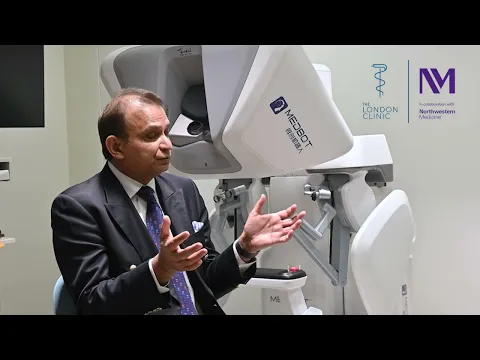
Robotic telesurgery, led from London
Professor Prokar Dasgupta carried out a prostatectomy remotely with the Toumai robotic system, working in real time with surgeons in Gibraltar. The video shows how the operation was done.
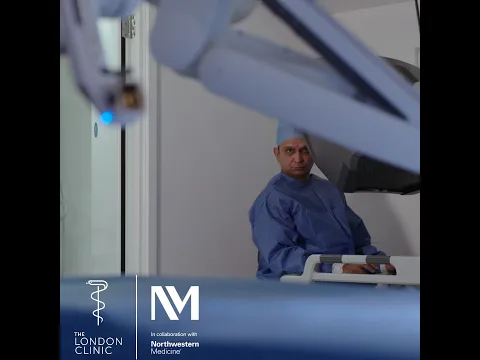
Two decades of robotic surgery
Two London Clinic consultants look back on the 20 years since they carried out the clinic’s first robotic-assisted prostatectomy, and on how robotic surgery has changed patient care.
Ready to talk to a specialist?
Get in touch to arrange your private consultation.
Recovery
From consultation to recovery
You will have clear guidance and follow-up support at every stage.
Planning
- Your diagnosis and test results reviewed in detail
- A treatment plan built around you
- Preparation in the weeks before surgery
The operation
- Carried out under general anaesthetic
- Minimally invasive, using the surgical robot
- Usually between two and four hours
Getting back to normal
- A hospital stay of one to two days
- A catheter for one to two weeks
- Everyday activities resumed gradually over the following weeks
- Fully recovered within several weeks
Understanding the risks
As with any operation, prostate surgery carries some risk. The main ones to discuss with your surgeon are:
- Leaking urine
- Problems with erections
- Infection or bleeding
- Uncommon surgical complications
These risks are significantly lower when the operation is done by an experienced robotic surgeon.
Read our blog on Will I Regain Erectile Function After Prostate Cancer Surgery?What Professor Dasgupta offers
- International recognition in robotic urology
- Advanced techniques to spare the nerves
- Personal care that puts the patient first
- Attention to quality of life as well as cure
- Access to the newest robotic systems
Read more about Professor Dasgupta.
Questions
Choosing a prostate cancer surgeon: frequently asked questions
Short answers to common questions. Your own situation is discussed in full at your consultation.
What makes a prostate cancer surgeon a leading specialist?
Leading prostate cancer surgeons are usually consultant urologists with wide experience of robotic and open surgery, a strong record in complex cases and an active role in multidisciplinary team (MDT) meetings. They explain every option clearly, share their results openly and stay with you from diagnosis to follow-up.
How is prostate cancer diagnosed?
Diagnosis usually involves a PSA blood test, a digital rectal examination, a multiparametric MRI (mpMRI) scan to find any suspicious areas, and a targeted or systematic biopsy to confirm the Gleason score and grade group. The results place the cancer in a risk group, following NICE guideline NG131.
Will I need surgery?
Not always. For low-risk cancer that is confined to the prostate, active surveillance may be the right choice, with close monitoring for any change. For intermediate or high-risk cancer, surgery or radiotherapy is usually discussed, sometimes with hormone treatment.
What should I ask a prostate cancer surgeon?
Ask how many of these operations they carry out each year, what their continence and erection results are, what their positive margin rate is, and how your PSA will be monitored after treatment.
Can I get a second opinion on my treatment plan?
Yes. A consultation can review your PSA results, MRI and biopsy findings and your proposed treatment plan, so you can make your decision with confidence.
How long does recovery from robotic prostate surgery take?
The operation usually takes 2 to 4 hours under a general anaesthetic. Most patients stay in hospital for 1 to 2 days and have a catheter for one to two weeks, with full recovery over several weeks.
Where does Professor Dasgupta see patients?
Professor Dasgupta sees private patients at The London Clinic, 145 Harley Street, London W1G 6BJ. Call +44 20 3996 1833 or send an enquiry through the contact page to arrange a consultation.
From the blog
Further reading
Articles from Professor Dasgupta's blog that look at these topics in more detail.
Best Prostate Cancer Surgeon UK: Key Questions to Ask Before You Decide
Read the articleEssential Questions to Ask Your Prostate Cancer Surgeon
Read the articleUnderstanding Prostate Cancer Surgeon Qualifications
Read the articleHow to Choose a Prostate Cancer Surgeon You Can Trust
Read the articleFinding the Best Prostate Cancer Surgeon in the UK: A Practical Patient Guide
Read the articleUK Leading Prostate Cancer Surgeon: How Professor Prokar Dasgupta Shaped Robotic Surgery
Read the article
Take the next step
Talk to an experienced consultant
Choosing your surgeon is one of the biggest decisions after a prostate cancer diagnosis. If you would like to talk through your PSA results, biopsy findings or treatment options, get in touch to arrange a private consultation.
Advice is always based on your own PSA trend, Gleason score and priorities, never a generic recommendation.