
Robotic prostate cancer surgery
Radical Robotic Prostatectomy Surgeon
A patient guide to expert robotic prostate cancer surgery
Professor Prokar Dasgupta is one of the UK’s leading robotic urological surgeons. He specialises in radical robotic prostatectomy, the robot-assisted operation to remove the prostate in men with prostate cancer. This guide explains what the operation involves, who it suits, how recovery goes and what results to expect.
- 2 to 4 hoursTypical length of the operation
- 1 to 2 nightsUsual stay in hospital
- 1 to 2 weeksWith a catheter
- 2 to 4 weeksBack to everyday activities
The operation
What is a radical robotic prostatectomy?
A radical robotic prostatectomy is a specialist operation to remove the prostate gland in men with prostate cancer. The surgeon works through small keyhole cuts using robotic technology, which gives an exceptional level of precision.
It is also called robot-assisted radical prostatectomy, or RARP. “Radical” means that the whole prostate is removed, together with the seminal vesicles, to treat cancer that is confined to the prostate or has only just grown beyond it. The aim is to remove all of the cancer while protecting bladder control and erections wherever it is safe to do so.
How does the robot help the surgeon?
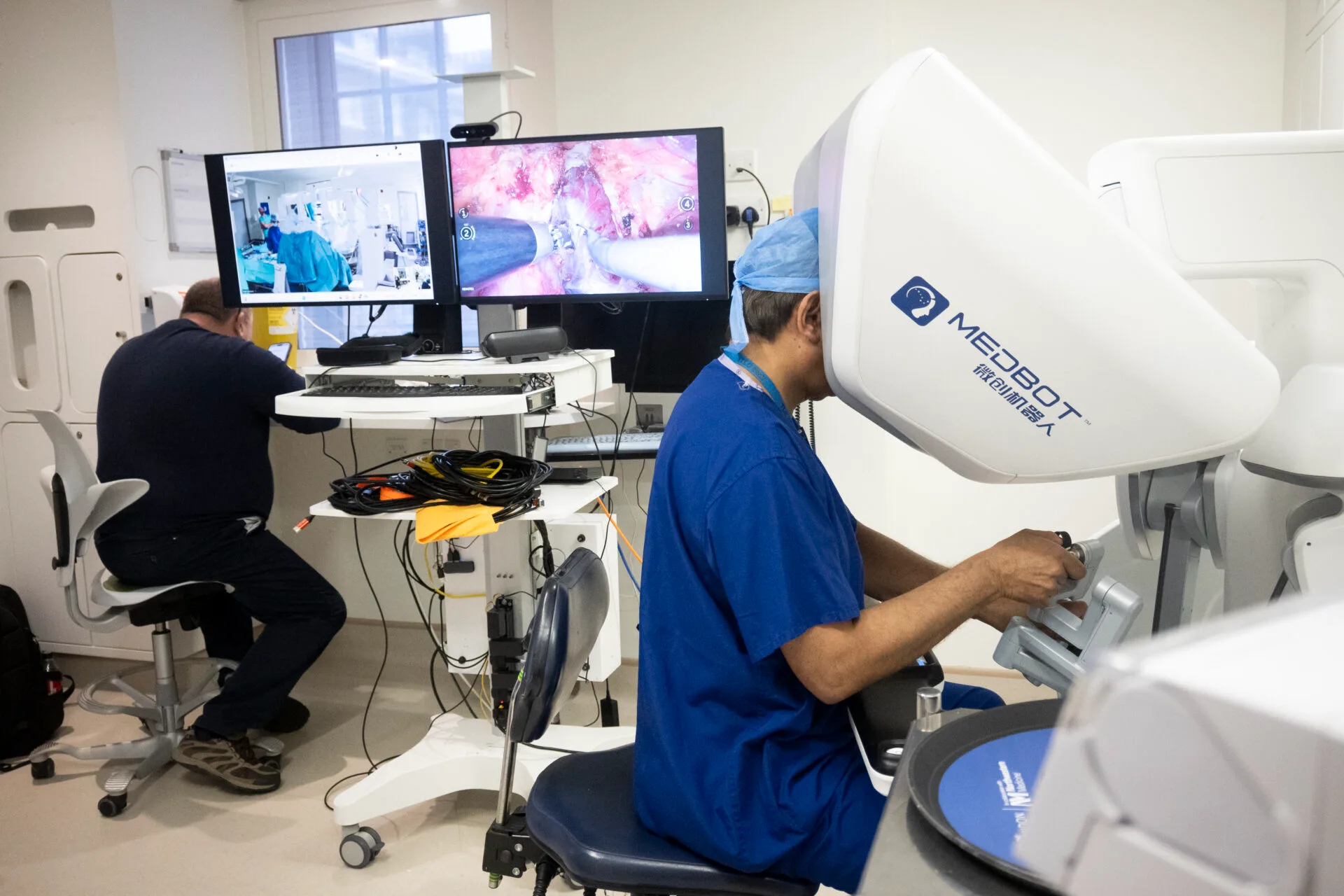
The surgeon sits at a console in the operating theatre and controls the robotic instruments. The system turns each movement of the surgeon’s hands into tiny, precise movements inside the body, with:
- A magnified, high-definition 3D view
- More dexterity than the human hand alone
- Better access to delicate structures, such as the nerves that control erections
- Extra precision for nerve-sparing techniques
The robot never acts on its own. The surgeon leads the whole operation, and the robot adds to the skill and control of an experienced robotic surgeon.
How is it different from open surgery?
Open prostate surgery is done through one larger cut in the lower abdomen. A robotic prostatectomy uses several small keyhole cuts instead, which usually means:
- Less bleeding
- Less pain after the operation
- A shorter stay in hospital
- A quicker recovery
- Smaller scars
For many men, robotic surgery is now the preferred way to have prostate cancer surgery.
Read our blog on Robotic prostatectomy vs open surgery: Which is right for you?Who is it suitable for?
A radical robotic prostatectomy is most often recommended for:
- Prostate cancer that is localised
- Some cases of locally advanced prostate cancer
- Men who are well enough for an operation and want treatment that aims to remove the cancer for good
Each patient is assessed individually. Your PSA level, MRI and biopsy results, general health and your own priorities for bladder control and sexual function are all taken into account.
What is the operation trying to achieve?
The first aim is to remove all of the cancer. The second, and still very important, aim is to protect quality of life, by keeping the nerves and muscles that control the bladder and erections whenever this is safe for cancer control.
The experience of your surgeon has a large part to play in getting the best balance between cancer control and function.
Read our blog on Understanding radical robotic prostatectomy: What patients need to knowBook your consultation today
We treat all of our enquiries with compassionate and confidential care.
Your surgeon
About Professor Prokar Dasgupta
Experience, innovation and results all count when choosing a surgeon for this operation.
Professor Dasgupta is recognised internationally as one of the world’s leading robotic urological surgeons. He was one of the pioneers who brought robotic prostate cancer surgery to the UK, has carried out thousands of robotic operations and has helped set the standards for modern keyhole prostate surgery.
He is Professor of Robotic Surgery at King’s College London and a Consultant Urological Surgeon at Guy’s and St Thomas’ NHS Foundation Trust. His clinical and academic work focuses on making robotic surgery more precise, developing nerve-sparing techniques, and improving cancer control and function for men having this operation.
He has received many national and international awards for his work in surgery and medical science, including an OBE for services to surgery and innovation. He is also a researcher, author and educator, and trains surgeons around the world in advanced robotic prostatectomy.
Patients benefit from:
- Wide experience of radical robotic prostatectomy
- Advanced nerve-sparing techniques to help protect bladder control and erections
- Treatment planned around each patient, based on the evidence
- Care in leading London hospitals
- A reputation built on innovation, research and results for patients

Benefits
What are the benefits of robotic prostatectomy?
Choosing your surgeon is one of the biggest decisions after a prostate cancer diagnosis. Robotic surgery brings together surgical skill and advanced technology to improve precision, recovery and results over the long term.
- 01
Keyhole surgery
The operation is done through a few small cuts rather than one large one. The surgeon uses the da Vinci Surgical System, which holds the instruments steady and moves them with great dexterity.
- Smaller scars
- Less damage to surrounding tissue
- Less discomfort afterwards
- A quicker return to normal activity
- 02
A magnified 3D view
The surgeon sees the prostate and the structures around it in high definition, magnified and in 3D. This is particularly helpful for delicate nerve-sparing work, and helps protect:
- Bladder control
- Erections
- Healthy tissue nearby
- 03
Less bleeding, fewer complications
Compared with open surgery, the robotic approach is linked to:
- Less blood loss during the operation
- Fewer blood transfusions
- A lower risk of wound problems
In most cases it also means less time in hospital.
- 04
Home sooner
Most men are up and moving within hours of their operation, and many go home within 24 to 48 hours, depending on their circumstances.
- Shorter stays in hospital
- Quicker physical recovery
- An earlier return to light activities
- 05
Strong cancer control
Removing all of the cancer is the first aim. With an experienced robotic surgeon, success is judged by:
- Clear surgical margins
- PSA tests after surgery
- Cancer control over the long term
- 06
Nerve-sparing skill
The technology does not decide the result on its own. A specialist surgeon combines it with detailed knowledge of anatomy to protect the neurovascular bundles, the nerves beside the prostate, wherever it is safe for cancer control.
The skill and experience of the surgeon is still the most important factor.
If you are thinking about a radical robotic prostatectomy, a surgeon who specialises in robotic prostate cancer surgery gives you the benefit of both the latest technology and specialist expertise.
Book your consultation today
We treat all of our enquiries with compassionate and confidential care.
What to expect
What happens before, during and after the operation?
Knowing what happens at each stage helps you feel prepared. Professor Dasgupta plans every step of your treatment around you.
Before your operation
Your consultation
Everything starts with a detailed consultation. Your diagnosis, MRI scans, biopsy results and PSA levels are reviewed together to make sure robotic surgery is the right treatment for you. You can talk through:
- The stage of the cancer and its risk group
- Whether nerve-sparing is likely to be possible
- What to expect for cancer control
- How bladder control and erections may be affected
You may have blood tests, an ECG and an anaesthetic assessment beforehand, and you will be given clear advice about your medicines, when to stop eating and drinking, and coming into hospital.
On the day
The operation
You are asleep under a general anaesthetic throughout. The robotic instruments and a high-definition 3D camera pass through small cuts in the abdomen, and every movement is guided by the surgeon. During the operation:
- The prostate is removed with care
- The nerves around it are kept where it is safe to do so
- Lymph nodes may be removed if needed
- The bladder is rejoined to the urethra
It usually takes 2 to 4 hours, depending on how complex the operation is.
The first few days
In hospital
You wake in the recovery area, then return to your own private room. Most men:
- Stay in hospital for one or two nights
- Have much less pain than after open surgery
- Are encouraged to get up and walk early on
A catheter is put in during the operation and usually stays in for one to two weeks. Before you go home you will be shown how to look after it.
The following weeks
Recovering at home
Recovery is usually quicker than after open surgery. In the first few weeks:
- Gentle activity is encouraged
- Heavy lifting is best avoided
- Pelvic floor exercises begin, to help with bladder control
Most men are back to their usual routine within 2 to 4 weeks. Bladder control improves over weeks to months. Recovery of erections differs from man to man, depending on age, how things were before surgery and whether the nerves could be spared.
Over the long term
Follow-up
Regular PSA blood tests check that the cancer has been controlled. At follow-up appointments your team keeps track of:
- PSA levels
- Bladder control
- Sexual function
- How your recovery is going overall
You can contact the specialist team directly at any point in your recovery.
Results
What results can I expect from robotic prostatectomy?
Patients want to know that the cancer will be treated effectively, and how their quality of life will be protected afterwards. Robotic prostatectomy offers excellent cancer control while aiming to keep bladder control and sexual health.
Cancer control
Robotic surgery lets the surgeon remove the prostate precisely, with little disturbance to the tissue around it, so that the cancer is fully removed. Studies show results that match or improve on open surgery, with a high rate of clear surgical margins and a low risk of the cancer coming back. Regular PSA tests after surgery pick up early any need for further treatment.
Bladder control and erections
A major advantage of the robotic approach is how well it can protect the nerves that control the bladder and erections. Most men regain bladder control sooner and get back to daily life more quickly than after open surgery. Erections can take longer to return, but the nerve-sparing techniques used by expert surgeons make a real difference over the long term.
Support through recovery
Patients regularly report high satisfaction, thanks to less pain, shorter hospital stays and a quicker return to normal life. The team works closely with each patient, with support that includes physiotherapy and sexual health advice.
Patient testimonials
I cannot recommend Professor Dasgupta highly enough. From the initial consultation to my recovery, I felt completely supported. The robotic prostatectomy was explained clearly, and the surgery went smoothly with minimal discomfort.
John M.London After being diagnosed with prostate cancer, I was anxious about surgery. Professor Dasgupta’s expertise in robotic prostatectomy gave me confidence. The precision of the surgery allowed me to recover quickly, and I am now back to my normal life.
Raj P.Surrey I chose Prokar because of their reputation for excellence in robotic prostate surgery. The team was professional and compassionate, and I felt informed every step of the way. My outcomes were better than I could have hoped for.
Michael L.Kent
Questions
Radical robotic prostatectomy: frequently asked questions
Short answers to the questions patients ask most. Your own situation is discussed in full at your consultation.
Read our blog on Advances in robotic prostate cancer surgery: What’s new in 2026 Read our blog on Patient stories: Life after robotic prostate surgeryWhat is a radical robotic prostatectomy?
It is keyhole surgery to remove the whole prostate gland, using a robotic system that the surgeon controls throughout. It treats prostate cancer with great precision, with less bleeding, less pain and a shorter recovery than open surgery, while the surgeon works to protect the nerves and tissue around the prostate.
Am I suitable for robotic prostatectomy?
It is usually suitable for men with localised prostate cancer who are well enough for an operation. Your general health, the size of your prostate and the stage of the cancer are all assessed before surgery is recommended.
What are the advantages of the robotic approach?
Smaller cuts and less scarring, less blood loss, a shorter stay in hospital and a quicker recovery. The added precision also helps with nerve-sparing, which can protect bladder control and sexual function.
What are the risks?
As with any operation, there are risks. They include short-term leakage of urine, problems with erections, infection and bleeding. Most side effects improve with time, and your surgeon will explain how they are kept to a minimum and how your recovery is supported.
How long does recovery take?
Most men spend one to three days in hospital and build back up to normal activities over four to six weeks. The return of bladder control and sexual function differs from person to person, and you will have a personal recovery plan with follow-up support.
Where does Professor Dasgupta see patients?
Professor Dasgupta sees private patients at The London Clinic, 145 Harley Street, London W1G 6BJ. Call +44 20 3996 1833 or send an enquiry through the contact page to arrange a consultation.
From the blog
Further reading
Articles from Professor Dasgupta's blog that look at these topics in more detail.
What Is a Radical Robotic Prostatectomy, and What Makes It Different?
Read the articleIs Robotic Prostatectomy Right for You?
Read the articleRobotic Prostatectomy Success Rates: What the Latest Data Shows
Read the articleLife After Robotic Prostatectomy: Recovery, Rehabilitation, and Results
Read the articleThe SAFE technique of Nerve Sparing Robotic Prostatectomy
Read the articleFrequently Asked Questions About Robotic Prostatectomy
Read the article
Book a consultation
Book your consultation today
We treat all of our enquiries with compassionate and confidential care.