

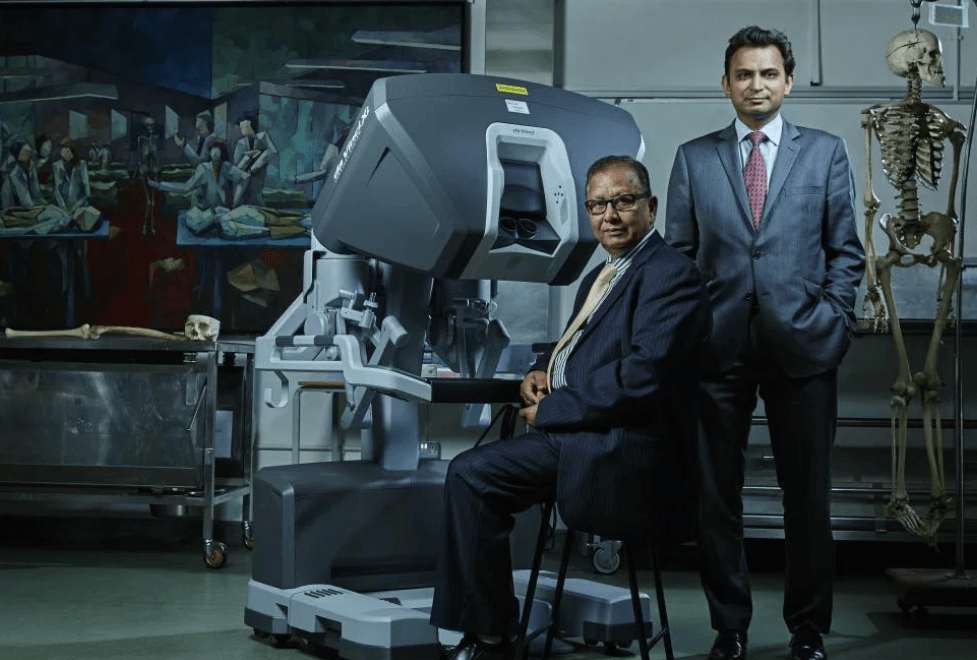
One of the most important considerations in prostate cancer surgery is preserving urinary continence and sexual function while ensuring complete cancer removal. Professor Prokar Dasgupta has pioneered a technique known as SAFE (Saline-Assisted Fascial Exposure) to improve nerve-sparing outcomes during robotic prostatectomy.
This blog explains what the SAFE technique is, how it works, and why it benefits patients.
What is Nerve-Sparing in Prostate Surgery?
The prostate is closely surrounded by delicate neurovascular bundles that control erectile function and contribute to urinary control. In traditional prostatectomy, these nerves can be at risk during tissue removal.
Nerve-sparing prostatectomy aims to carefully preserve these bundles while removing cancerous tissue.
Introducing the SAFE Technique
The SAFE technique was developed by Professor Dasgupta to enhance nerve preservation during robot-assisted radical prostatectomy.
SAFE involves gently injecting small amounts of saline between the prostate and surrounding nerves. This creates a natural separation that allows the surgeon to clearly see and protect the neurovascular bundles.
Key benefits of SAFE:
- Improves visualisation of delicate nerve tissue
- Minimises traction or pressure on nerves
- Reduces risk of nerve injury
- Supports faster recovery of erectile function post-surgery
Read more about robotic prostatectomy.
How SAFE Differs from Traditional Nerve-Sparing
Traditional nerve-sparing relies primarily on careful dissection and the surgeon’s experience. While effective, it can be more challenging in certain anatomies, where nerves are tightly adherent to the prostate.
SAFE adds a simple but effective step—the saline separation—which enhances precision without adding significant operative time or risk.
Benefits for Patients
Patients undergoing robotic prostatectomy with the SAFE technique often experience:
- Higher rates of potency preservation (erectile function)
- Faster return of urinary continence
- Minimal additional recovery time
- A lower risk of inadvertent nerve damage
SAFE is particularly useful for patients seeking nerve-sparing in challenging anatomical situations, making robotic surgery safer and more effective.
Research and Clinical Outcomes
Early studies and ongoing clinical experience indicate that SAFE can improve functional outcomes without compromising cancer control. Professor Dasgupta continues to refine this technique and integrate it into his robotic surgery practice at leading UK centres.
Is SAFE Right for Me?
Not all patients are candidates for complete nerve-sparing, as it depends on:
- Tumour location and aggressiveness
- Patient age and baseline function
- Prostate anatomy
Your surgeon will evaluate these factors and discuss whether SAFE nerve-sparing is feasible in your case.
Conclusion
The SAFE technique represents a significant advance in nerve-sparing robotic prostatectomy, improving the chances of maintaining erectile function and urinary control while effectively treating prostate cancer.
For more information about robotic prostatectomy and the SAFE technique, visit Prokar.co.uk’s Robotic Prostatectomy page or schedule a consultation with Professor Prokar Dasgupta.